
Abdominal Thrusts for Choking: What’s Changed and What You Need to Know
If you learned the Heimlich maneuver a few years ago, you already have a head start — but the technique has been updated in ways worth knowing. The current abdominal thrusts for choking response taught in AHA-based courses is more complete than what most people learned, and those changes could make a real difference if you ever face an emergency in Atlanta, Decatur, Sandy Springs, Buckhead, Brookhaven, or Norcross.
The Heimlich Maneuver Has a New Name
Today’s AHA training no longer calls it the Heimlich maneuver — it’s now referred to as abdominal thrusts. The name change reflects a broader shift toward evidence-based guidance rather than a single trademarked technique. The goal hasn’t changed: clear a blocked airway before the person loses consciousness. But how you get there now involves more steps.
How the Updated Abdominal Thrusts for Choking Response Sequence Works
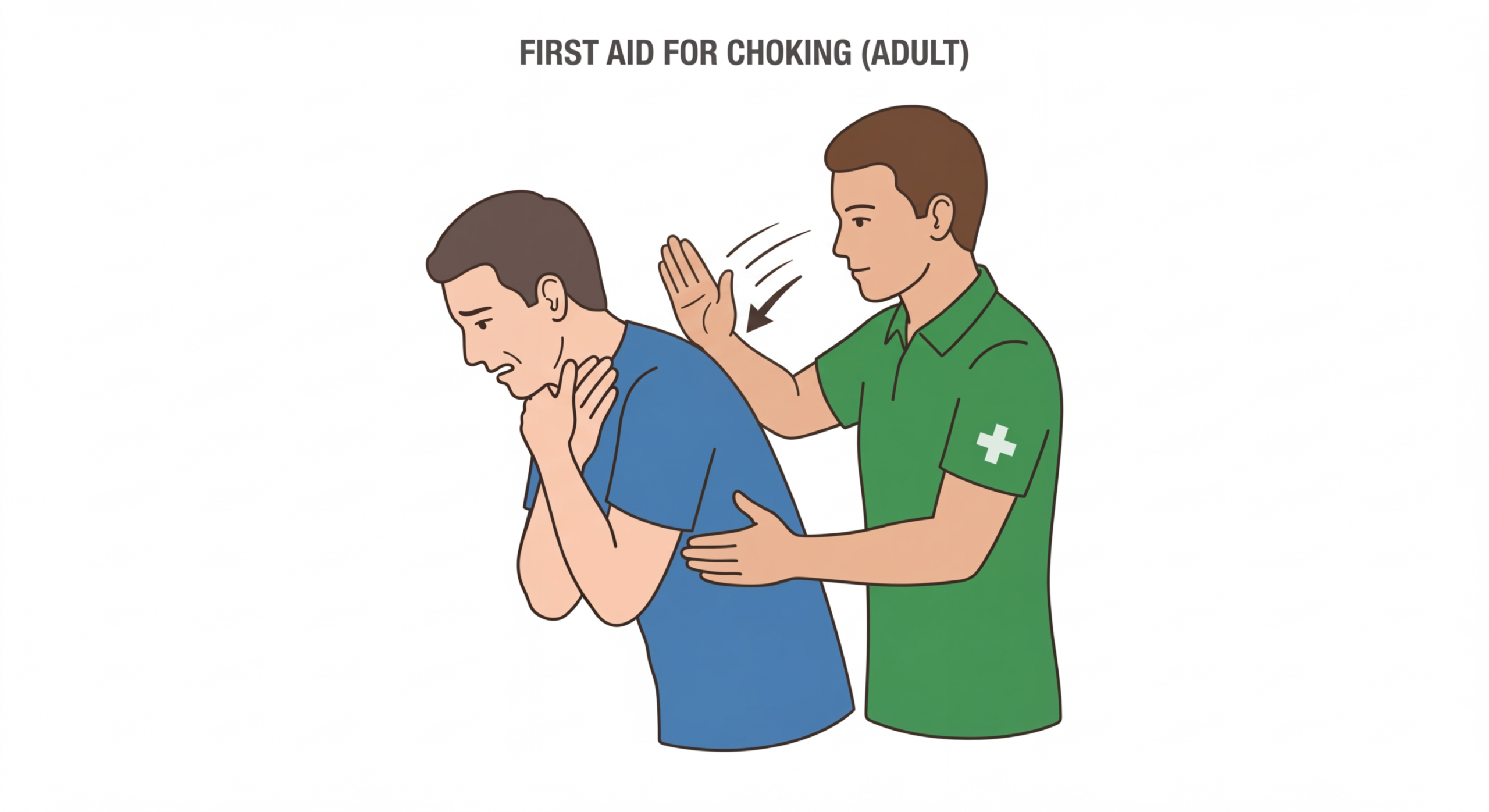
Modern training places abdominal thrusts within a fuller response. Here’s what to do for a conscious choking adult:
-
Ask if the person is choking and whether they can speak or cough
-
Encourage forceful coughing if they’re still able
-
Deliver 5 firm back blows between the shoulder blades with the heel of your hand
-
Follow with 5 inward-and-upward abdominal thrusts — fist just above the navel, below the breastbone
-
Alternate back blows and abdominal thrusts until the object clears or the person loses consciousness
-
If they become unconscious, call 911 and begin CPR immediately, checking the mouth visually before rescue breaths
The key update: back blows now come before abdominal thrusts, and the two techniques alternate in sets of five. Research shows this combined approach works better than thrusts alone.
What’s Different From Older Training and Newer Abdominal Thrusts for Choking
If your certification is a few years old, here’s what’s likely changed:
-
Back blows are now part of the sequence — older training often skipped them entirely
-
The two techniques alternate rather than repeating thrusts only
-
Modified approaches are now clearly taught for pregnant individuals, larger adults, and people in wheelchairs
-
Immediate CPR with a visual mouth check is emphasized if the person becomes unconscious
These aren’t minor tweaks. They represent a meaningfully more effective response, which is why hands-on practice matters more than ever.
Special Situations to Know
Standard abdominal thrusts don’t apply in every case. Current AHA training covers:
-
Pregnant individuals or larger adults — use chest thrusts instead to avoid injury
-
Person in a wheelchair — crouch behind them and adapt hand placement for effective thrusts
-
Choking alone — thrust your abdomen against a firm surface like a chair back or countertop edge
Knowing these variations is part of what makes current AHA certification more valuable than older coursework.
Why Hands-On Practice Makes the Difference
Watching a video isn’t enough. When a real choking emergency happens, your body needs to already know the sequence. AHA-based training at gacpr.com builds that muscle memory through manikin practice, so you can act quickly and confidently instead of freezing.
Find a Class Across Metro Atlanta
Training options through gacpr.com make it easy to get current, no matter your schedule:
-
Open CPR classes — flexible individual certification sessions in Atlanta
-
On-site group training — ideal for workplaces, organizations, or groups
-
Family and Friends CPR — a relaxed, non-certification option for home and community preparedness
When picking a class, look for AHA-aligned curriculum, hands-on manikin time, and full coverage of the abdominal thrusts choking sequence — including back blows and modified techniques for special situations.
Take the Next Step – Learn Abdominal Thrusts for Choking
The technique has evolved from a single move into a complete, evidence-based response — and learning the updated version is one of the most practical things you can do for the people around you. Schedule your class at gacpr.com today and feel confident you’re ready if it ever matters.