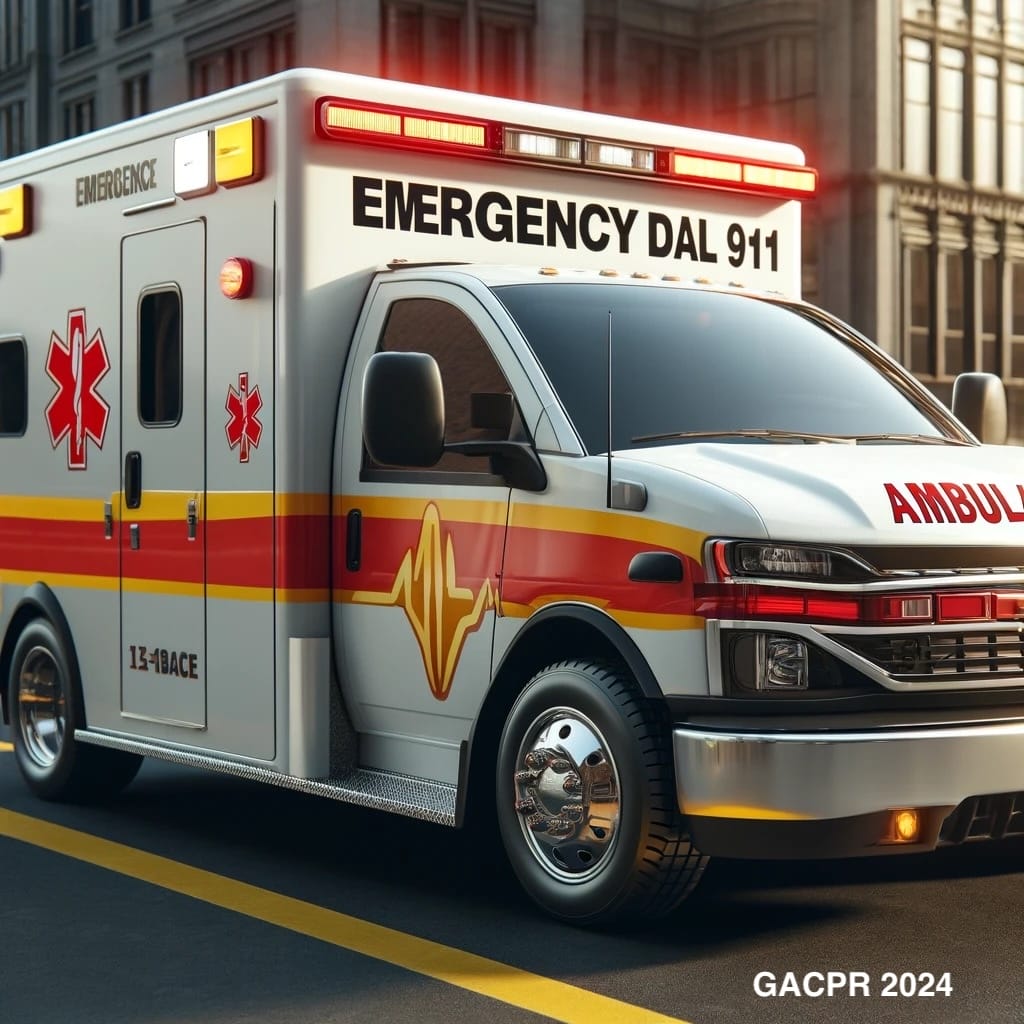
Out of the blue, someone collapses where you work. Quickly, after making sure the scene is safe, you point to a bystander and shout loudly – Call 911!
No surprise there, as it is safe to assume that everyone knows to call 911 and the importance of calling 911 in an emergency. While one of the most important actions in any emergency, is to activate Emergency Medical Services (EMS), the term “activate” means more than just to call 911.
In an emergency, every second counts, and these steps can help make valuable use of each one. If we remember during that incredibly intense emergency experience, to follow a couple more steps, time can be saved, along with lives.
Before the explanation, here is a simple list of steps to properly activate EMS:
- Call 911 – Make the decision, make the call
- Send another bystander to find and bring an AED even if it doesn’t appear to be a cardiac emergency.
- Send one or more individuals outside to flag down the ambulance, making sure they can get through any obstacles to entrance like locked doors or gates
- Point to someone and have them clear the area of non-essential bystanders.
The Steps Explained
- In the list, Call 911 is first. Please don’t hesitate to call 911. The American Red Cross encourages you, “When in doubt, always call 911”. If you really think there is an emergency, there is. Please DO NOT ask an individual if you should call 911. Be assured, their answer will be no. Make a decision, make the call. If they don’t want to go with the paramedics, they don’t have to, and there won’t be any charge to them. Let them know that the decision to go to the hospital is theirs, while you don’t have a choice and have to call 911.
- You always want an AED by your side, in any emergency. Sure, AEDs, (Automatic External Defibrillators) are only actually used if a patient is out cold and not breathing. What we don’t want, is to have to leave the patient to get one later, if it then becomes necessary. Also, attached to any properly equipped AED will be a 1st response kit. In this kit you will find protective gloves, CPR face shield, a towel, razor and shears. Sometimes there are antiseptic wipes, and even though they don’t come this way, I have aspirin in mine to prevent chest pain from going to full cardiac arrest while waiting for EMS. More on these facts here: https://www.gacpr.com/wyntk/
- Always, if possible, send a responder out to meet the ambulance and lead them to the exact location of the emergency. There may be locked doors at an office, or a gate that needs to be opened at an apartment complex. Also, many locations are quite large and of course only have one address. Think of a grocery store. How would paramedics find you and the patient in a grocery without someone to lead the way. Think of what it would take to get an EMT or Paramedic to the side of the patient from the door, and what you can do to help make that happen.
- This tip adds value, but it is not crucial. If you can remember, have another person get non-essential bystanders out of the room or area. Often times, patients will lose control of bodily function. Often times it will be necessary for EMS to remove clothing to provide care. These are but a few examples of why we don’t want an audience in an emergency. In emergencies, modesty is out the window in order to save a life. We want to preserve any of the patient’s dignity we can. Remember, bystanders can’t help it; it’s human nature to want to look, whether we like that about ourselves or not.
In any emergency, activating EMS is a crucial step. By including the steps above in the process, we can save time, save lives and help to achieve better outcomes for the patient.